
Hot take: Digital Twins should be outcome-driven, not technology-driven.
The conversation around Digital Twins often starts in the wrong place. We talk about sensors, platforms, BIM models, data lakes, IoT infrastructure and increasingly, AI. But technology alone does not create value. The real question is much simpler: What do we want a Digital Twin to help us achieve?
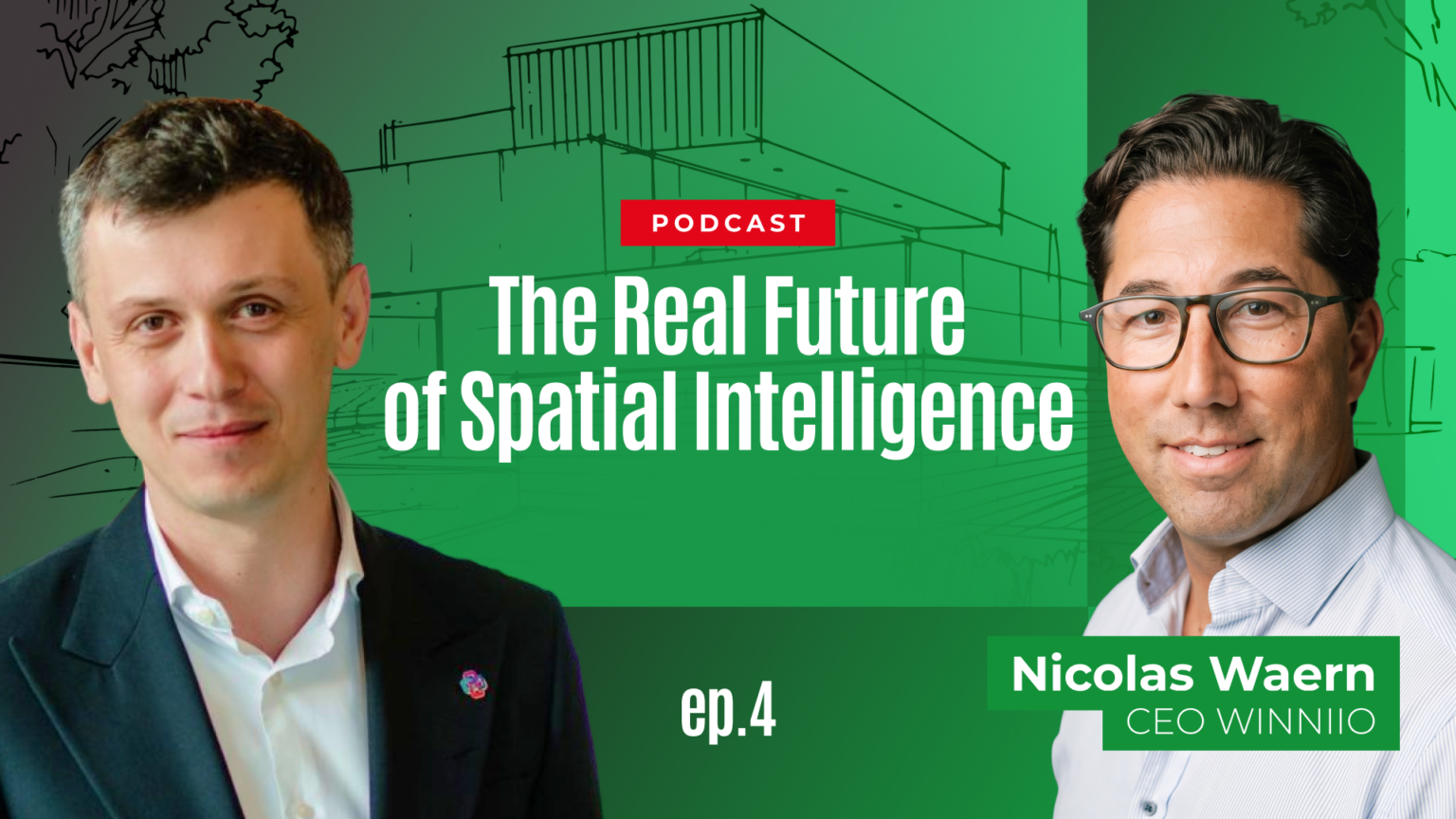
In the latest episode of DT Vector, Nicolas Waern, Digital Twin Specialist, challenges the industry to rethink how we approach digital transformation in the built environment. Rather than starting with the technology or the data already available, he argues that organizations should begin with the outcomes they want to achieve: better decisions, more efficient operations, lower costs, reduced emissions, or greater visibility across the asset lifecycle.
This shift in perspective has important implications for how buildings are designed, constructed and operated. A Digital Twin is not simply a more sophisticated 3D model, nor is it valuable because it connects more data. Its value comes from turning connected information into better decisions and measurable outcomes.
Watch the episode now
On this episode
We discuss:
- Why the industry is moving from Cloud-Native to Edge-Native buildings
- How fragmentation, interoperability and procurement limit digital transformation
- Open standards vs. AI agents and the future of connected building data
- Why outcomes and decision-making matter more than simply collecting data
- Gaussian Splats and Spatial Intelligence: what they mean for the built environment
- How much a Digital Twin really costs and the idea of the Minimum Viable Twin
- The rise of Physical AI and robotics in the built environment
- How Digital Twin thinking is expanding into healthcare and human biology
Real-world examples: how connected building data can drive better decisions
Modern buildings rarely rely on a single technology platform. In the podcast, Nicolas Waern gives several examples that illustrate what happens when building systems, data and technologies need to work together and what becomes possible when they do.
One example is the way large buildings can bring together systems from different technology providers, such as Schneider Electric, Siemens and Johnson Controls. Each platform generates valuable information, but because these systems have historically been developed independently, connecting and interpreting their data can be challenging. The result is often a building where valuable information exists, but remains trapped in separate technological “islands.”
Nicolas argues that the next step is not simply to collect more data, but to make that information interoperable and actionable. Open standards can help systems communicate, while AI agents could increasingly act as an intelligent layer capable of interpreting and connecting information across different platforms.
The potential impact becomes clearer when we look at what this data can actually be used for. By connecting information from systems such as parking, access control, lifts and building management, building operators can gain a more complete picture of how an asset is being used. This can support practical decisions, from adjusting cleaning and security schedules to optimizing building systems and reducing unnecessary energy consumption.
These examples highlight an important principle behind Digital Twins: the value is not in having more data, but in connecting the right data to the decisions that matter.
The future is moving from cloud-first to edge-native buildings
One of the biggest shifts in smart buildings is the move from cloud-first to edge-native infrastructure. Ten years ago, the dominant idea was to move building data into the cloud and integrate systems there. But as buildings became more connected, the limitations became increasingly visible: high costs, fragmented systems, dependency on external platforms, and the need for faster, local decision-making.
Today, Nicolas argues that more intelligence is moving closer to the physical asset. Instead of sending everything to the cloud, buildings can increasingly process data and run intelligence locally, giving owners greater control over both their data and their technology. This also creates an opportunity to reduce vendor lock-in and build more open, secure and autonomous buildings.
The long-term vision is not simply a smarter building, but a network of intelligent assets that can communicate with one another while remaining under the owner’s control.
AI agents could change interoperability
For years, interoperability has depended heavily on open standards, taxonomies and ontologies to make different building systems speak the same language. Nicolas has worked extensively in this space, including with standards such as BACnet, and points out that the approach has an inherent challenge: everyone has to adopt the same standards for them to work effectively.
AI agents could introduce a different approach. Nicolas compares an AI agent to a translator standing between two people who speak different languages. Instead of forcing every system to use exactly the same language, an AI agent could interpret information from different systems and help them communicate.
Digital Twins are about testing reality before changing reality
For Nicolas, this is where the real value of a Digital Twin becomes clear. A Digital Twin should not simply tell you what is happening inside a building; it should allow you to experiment with possible changes before implementing them in the physical world.
He gives a simple example: if the goal is to reduce a building’s energy consumption by 25%, the Digital Twin can be used to simulate different scenarios and identify what could lead to that outcome. The focus shifts from asking “What data do we have?” to asking “What outcome do we want?”
Nicolas takes this idea even further with his Minimum Viable Twin (MVT) approach. A Digital Twin does not necessarily have to begin as a massive, expensive technology project. It can start with an up-to-date floor plan or scan, bring together the people and information currently working in silos, and then introduce sensors or simulations where they can create value.
The principle is simple: start with the decisions and outcomes, then work backwards to the data and technology needed to achieve them.
The DT Vector podcast is hosted by Eugen Ursu, co-owner of Graphein. A new episode is released every month, featuring conversations with experts shaping the future of real estate, construction, technology, and the built environment.
You can listen to all DT Vector episodes on:
Follow DT Vector wherever you listen to podcasts.